Advancing Global and U.S. Health Security Through Laboratory Leadership Programs | Global Health Protection

The Challenge
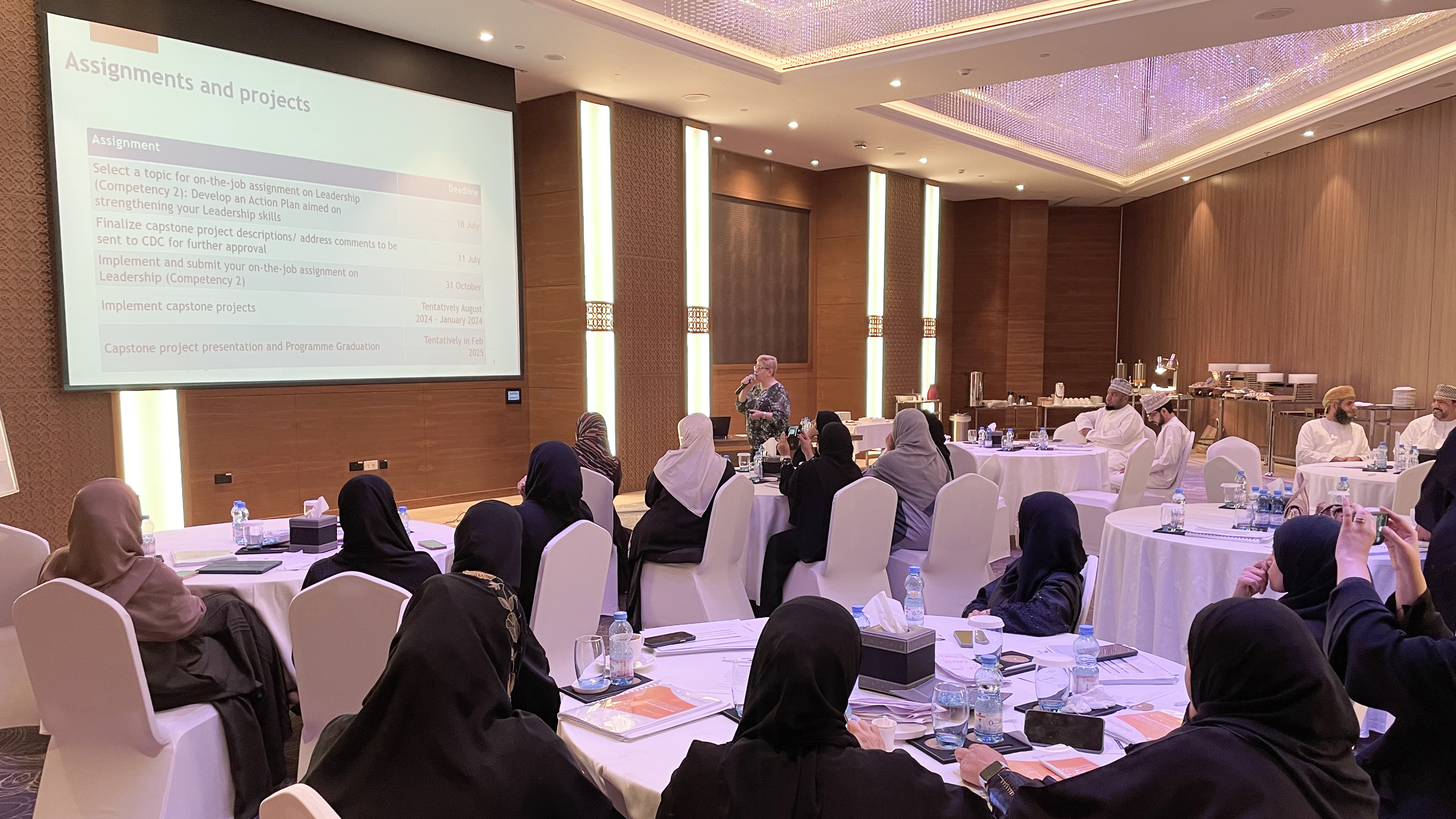
When health threats emerge, it’s often laboratory experts who sound the alarm first. But in many parts of the world, lab systems are under-resourced, under-coordinated, and unable to respond quickly. That’s where the Global Laboratory Leadership Programme (GLLP) comes in—a CDC-supported initiative designed to enhance, strengthen, and sustain national lab systems by equipping mid-level laboratory professionals with both technical know-how and leadership skills.
In Oman, GLLP did more than fill a gap—it laid the foundation for long-term, cross-sector collaboration, and laboratory system resilience. With support from CDC’s Division of Global Health Protection (DGHP) and under the leadership of both the CDC Middle East/North Africa (MENA) Regional Office, Oman’s Central Public Health Laboratory (CPHL) became one of the first countries in the MENA region to fully implement GLLP. The result? A trained, prepared for action, and now-graduated cohort of 27 scientists who are ready to lead.
The Global Laboratory Leadership Programme is more than a training initiative—it’s a strategic investment in global and U.S. health security. What we’ve seen in Oman is a powerful example of what happens when national leadership, global partnerships, and CDC expertise come together to build systems that can detect and respond to threats faster, smarter, and more sustainably. The ripple effects of this work will extend far beyond borders.
– Dr. Benjamin Park, Director of Division of Global Health Protection
A Strategic Response to a Critical Need
Oman’s Ministry of Health, Ministry of Agriculture, and Ministry of Education partnered with CDC, CDC’s implementing partner Integrated Quality Laboratory Services (IQLS) and global organizations like the World Organisation for Animal Health to deliver the program over 24 months. From day one, the focus was on real-world impact: developing national lab policies, improving biosafety practices, streamlining inventory systems, and preparing labs to respond faster and more effectively to emerging threats.
This kind of investment aligns closely with U.S. global health security priorities. As CDC continues to emphasize the importance of preventing outbreaks at their source, GLLP is a concrete example of how global partnerships directly contribute to American safety. Stronger labs abroad mean faster detection, more accurate diagnoses, and reduced risk of cross-border transmission.
From Capacity Gaps to Graduation
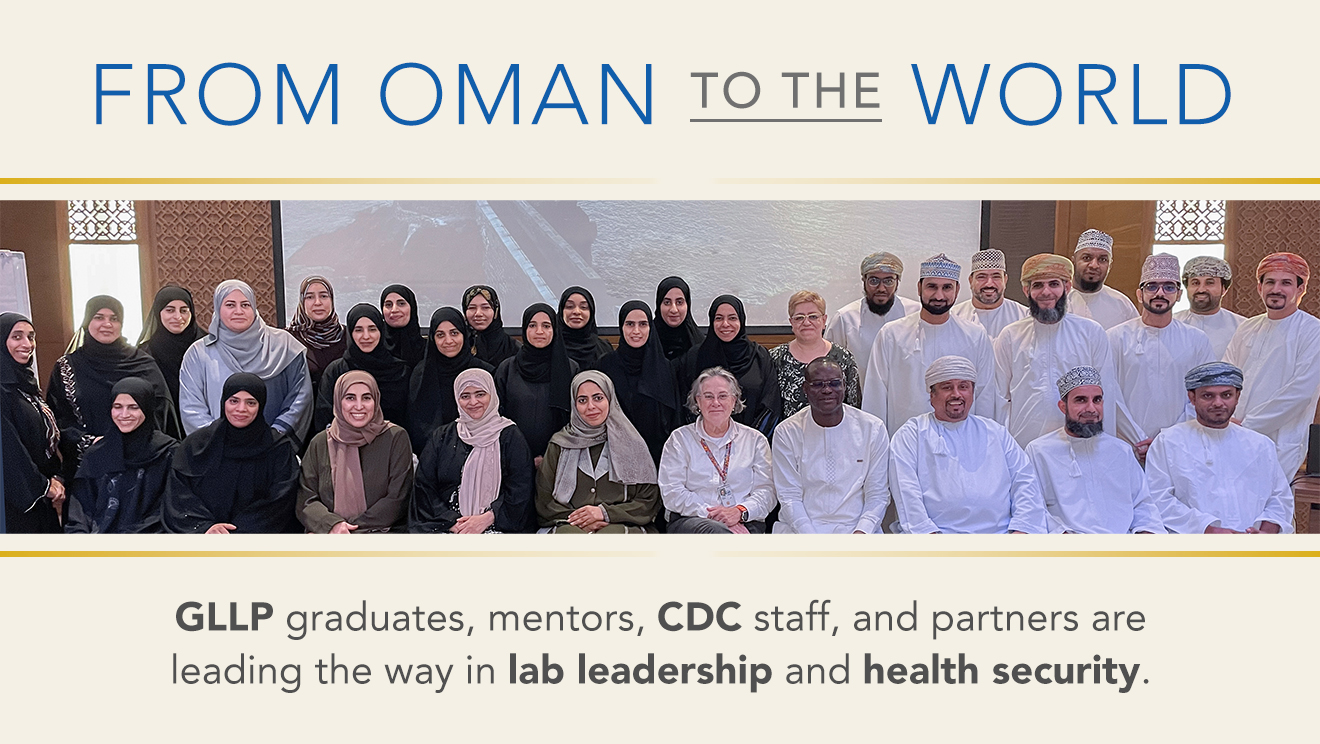
Oman’s graduation ceremony in April 2025 was more than a milestone—it was proof of concept that U.S. investment in global laboratory systems directly strengthens America’s safety at home. The 27 scientists who completed the program are not just technically equipped; they are leaders prepared to mentor others, shape national policies, and collaborate across sectors to stop health threats at the source.
The Global Laboratory Leadership Program, the U.S.–Oman laboratory twinning initiative, and the series of CDC-supported laboratory trainings in Oman all directly advance the Ministry of Health’s priority to strengthen national laboratory systems. Together, these joint efforts not only build Oman’s laboratory capabilities, but also reinforce its growing role as a regional leader in public health laboratory excellence. With future GLLP cohorts already being planned, and increasing national ownership, Oman is quickly becoming a regional example. When sustained U.S. engagement meets strong local commitment, communities abroad are protected and in turn, so are Americans at home.
The Bigger Picture
As CDC’s global role continues to evolve in the context of changing leadership and constrained resources, stories like CDC’s collaboration with Oman demonstrate how significant, sustainable investments make a measurable impact. GLLP doesn’t just train lab professionals—it creates systems that can detect and respond to health threats before they become global crises.
In that way, this program doesn’t just protect Oman. It protects us all.
link